The Stronghold
Bridget Jones: Mad About the BoyThe Stronghold is an illegal American-style speakeasy in Hoxton, housed in a brick warehouse behind an unmarked metal door. It becomes a regular fixture in Tom’s social world and, for Bridget Jones, the setting of an unexpected first step back toward physical intimacy: a dance that becomes a kiss, then ends when the stranger’s invitation to go somewhere quieter overwhelms her with alarm. Its improvised, secretive surroundings suit a night poised between exhilaration and retreat.
Setting and Atmosphere
Tom introduces The Stronghold as a pop-up club run by a client from his therapy practice. He enthuses about its mixture of ages, races and sexual orientations, and says Gwyneth has been seen there. To him, it feels like a brilliantly directed music video: fashionable, vivid and socially mixed. Talitha, by contrast, mocks the short-lived cachet of anything called a pop-up. Their exchange establishes the venue as a subject of competing expectations even before the group arrives: Tom sees an exciting alternative to ordinary nightlife, while Talitha questions how long its novelty can last.
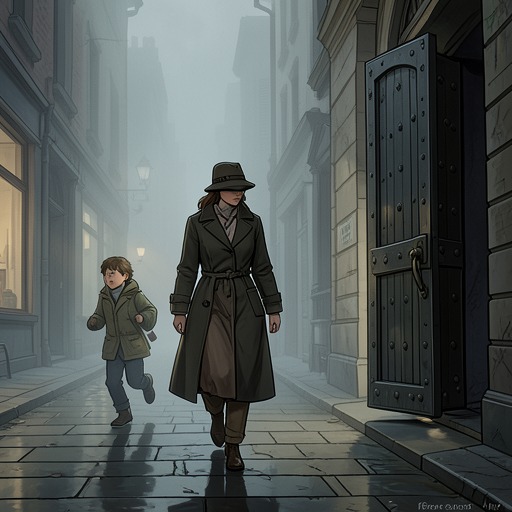
The entrance makes the club’s hidden character concrete. The party passes through an unmarked metal door, enters using a buzzer code and climbs a concrete staircase that smells as though someone has been smoking cannabis. Inside, brick walls, straw bales and battered sofas give the warehouse an improvised western atmosphere. A band plays, and young men staff the bar while looking around nervously, as if a sheriff might ride in and shut the place down. Artistic lighting obscures faces at first, but Bridget quickly notices that the room contains more than teenagers. The setting is at once makeshift and theatrical: its secrecy and cowboy imagery give the night a sense of temporary escape.
From Invitation to Night Out
The visit grows out of an evening at Quo Vadis, where Tom, already settling into his fourth mojito, announces that the group will take Bridget to The Stronghold. The plan is not immediate: the diary records that they are going on Thursday. The delay gives the excursion the shape of an arranged social outing rather than a chance encounter, though the experience that matters most to Bridget will arrive without planning.
The friends’ conversation also sets up the question the club will answer for Bridget. Jude wonders who still meets people in real life, while Tom points out the advantage of seeing someone in person rather than discovering that an online photograph is fifteen years old. The venue therefore stands against the mediated uncertainty of dating profiles. It puts the group in a room where people can be assessed face to face, though it offers no guarantee that such contact will be simple or safe.
Bridget’s Encounter
Once inside, Tom and Talitha dance with Jude, while Bridget sits apart on a hay bale. She longs to go home, hold close to her children and recover a sense of who she is; she also recognizes that she is using motherhood to cover her fear that she is old and past her moment. The hesitation is not merely about whether to dance. The club has brought her into a social space associated with flirtation, while her thoughts pull her back toward home, identity and the life she shared with Mark Darcy.
A man in jeans sits beside her and asks her to dance. Bridget accepts without first constructing a plan or rehearsing what to say. He takes her hand, helps her up with a strong arm and keeps an arm at her waist as they cross the floor, a practical kindness given her thigh boots. The slow dance allows her to settle into the encounter; she notices his brown eyes, crinkly smile and leather jacket. As she rests an arm on his shoulder, she understands the appeal behind Tom and Talitha’s encouragement to resume dating: physical desire can be present without requiring a larger plan.
The dance becomes a kiss. Bridget experiences the change as a sudden release after years of feeling blocked, but the rush immediately collides with other claims on her attention. She thinks of her children and Mark, and questions what she is doing and who the man is. Tom and Talitha have watched her with astonishment, but the moment’s intensity belongs to Bridget’s own uneven movement between pleasure and alarm. The kiss demonstrates that desire has not disappeared; it does not make her uncertainty disappear with it.
The Threshold and Its Reversal
The man suggests going somewhere quieter. That request changes the encounter’s meaning for Bridget: what had felt like a spontaneous dance and kiss now seems to her like a plot, and she imagines that he intends to murder and eat her. The scene does not establish that the stranger has such an intention; it records Bridget’s frightened interpretation. She abruptly says she has to leave, ending the encounter at the point where intimacy might have moved beyond the public dance floor.
The Stronghold thus frames a double threshold. Its coded entrance carries Bridget from a familiar evening into a concealed, heightened social world; the dance carries her from self-conscious observation into unexpected physical contact. Yet the invitation to leave the room proves a boundary she is not ready to cross. The club’s mixture of theatrical freedom and uneasy secrecy mirrors that reversal: it makes renewed desire imaginable, but the night closes with Bridget choosing distance rather than surrendering her caution.